One product, every number defined once.
Crossruled is where delivery, finance, and sales read the same capacity and margin numbers, and edit them where they live.
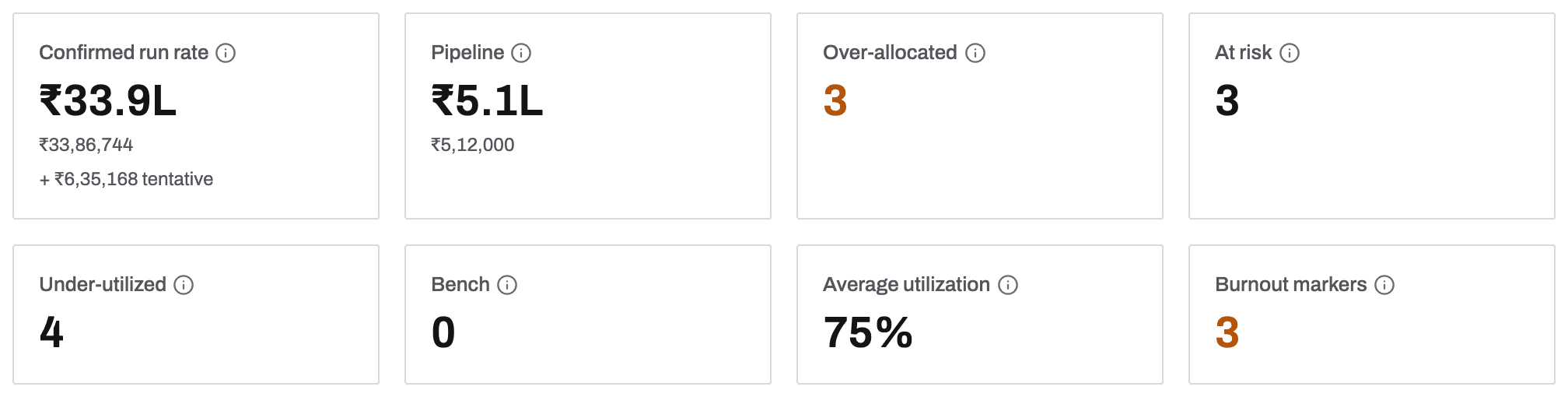
Every number in this row is defined once, at the end of this page.
Watch a walkthrough
A narrated tour of a demo workspace, just under three minutes: read the ledger, catch an over-allocation, import the sheet, price a role line against payroll, and see what a viewer cannot see. Short captions are on screen; full captions are in the player.
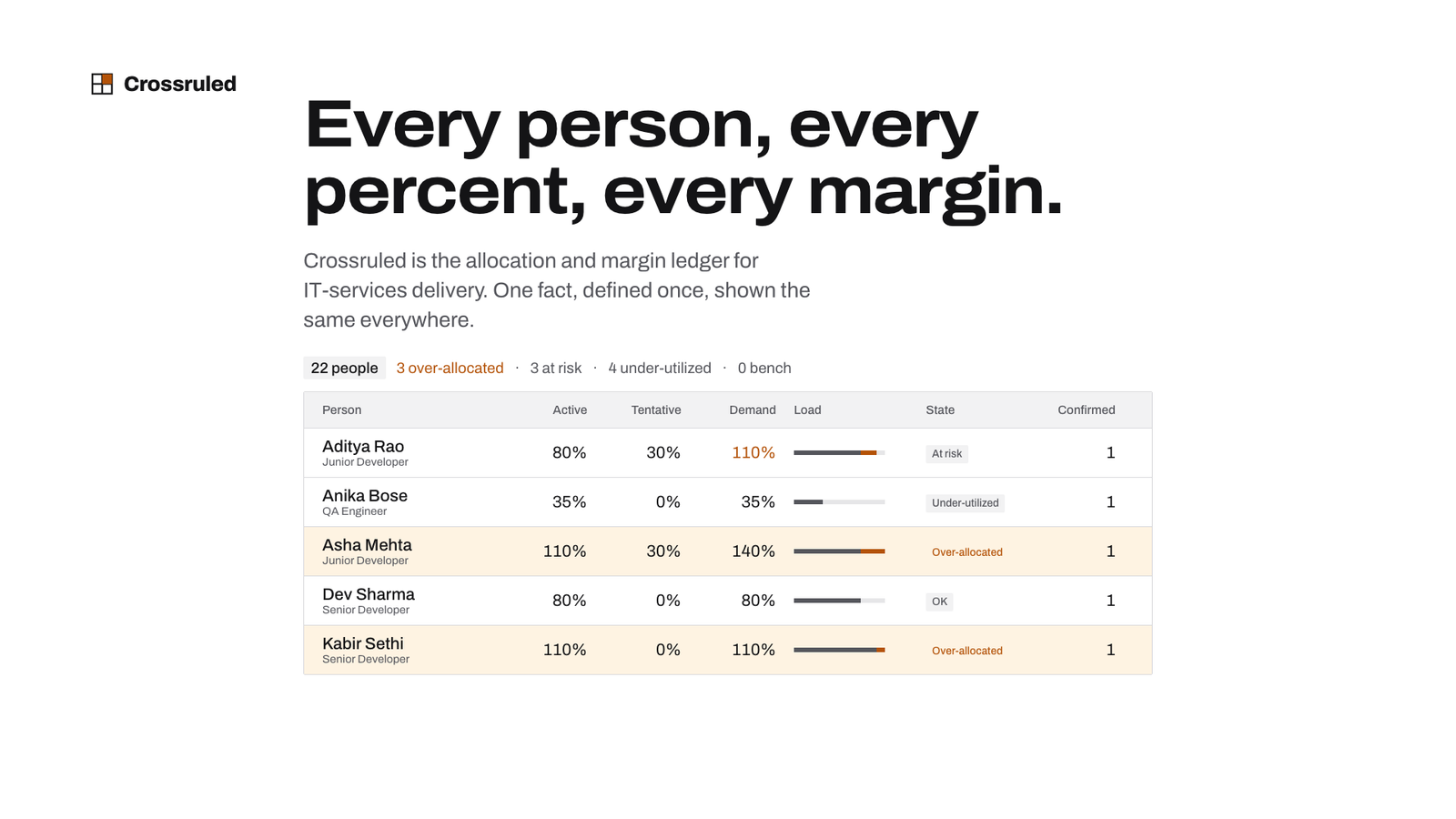
The deck, for the people who were not on the call
The margin problem, the ledger, who sees what by role, the trial and what it costs (nothing), and what is on the roadmap. A PDF you can forward.
Download the deck (PDF)Start from your sheet
Your master sheet, checked row by row. Download the template, paste up to 500 people, and every bad row is named before a single record is saved.
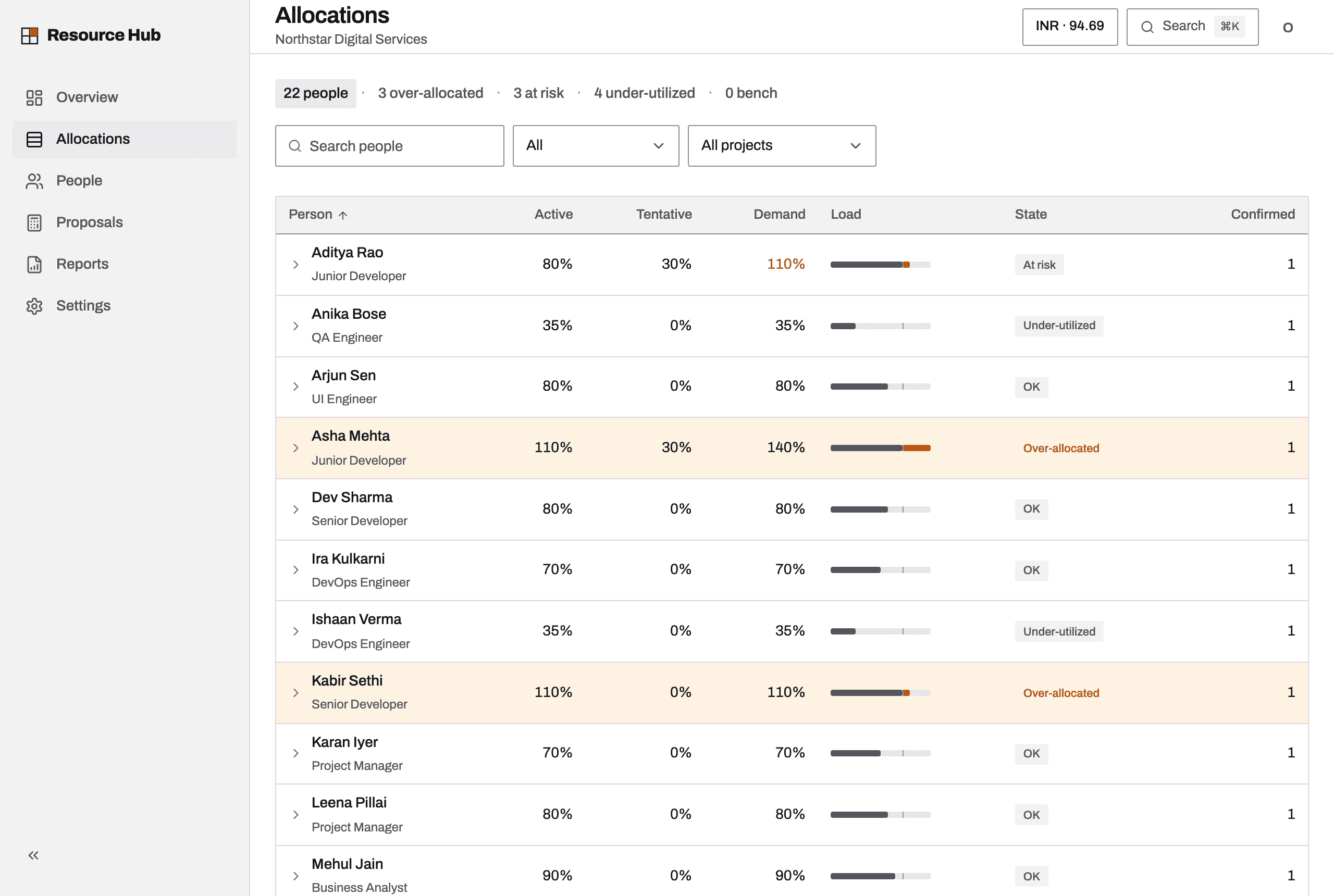
See who breaks when the deal lands. At-risk flags people who look fine on confirmed work but are over 100% once tentative work is counted.
See the whole ledger
Every person, every allocation, every percent in one table. Over-allocated rows turn amber the moment they cross 100%.
Change a number, keep your evening
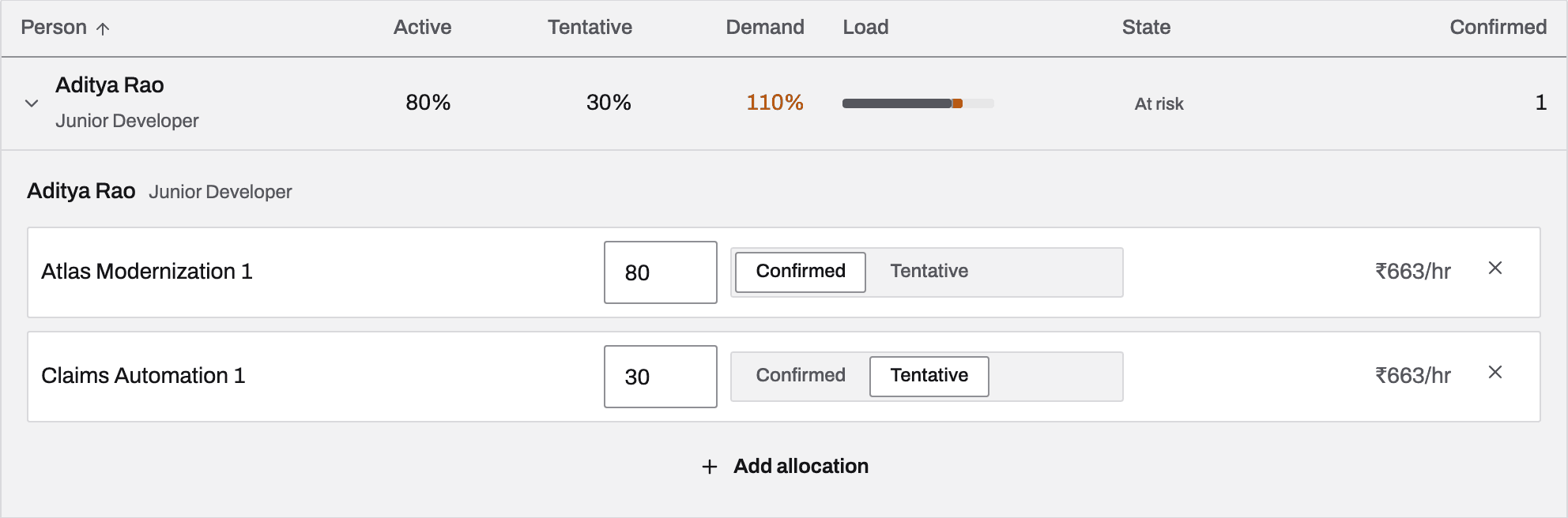
Open a row, change the percent or the status, and the change applies at once. Undo brings it back for six seconds if you did not mean it.
Price against what people actually cost
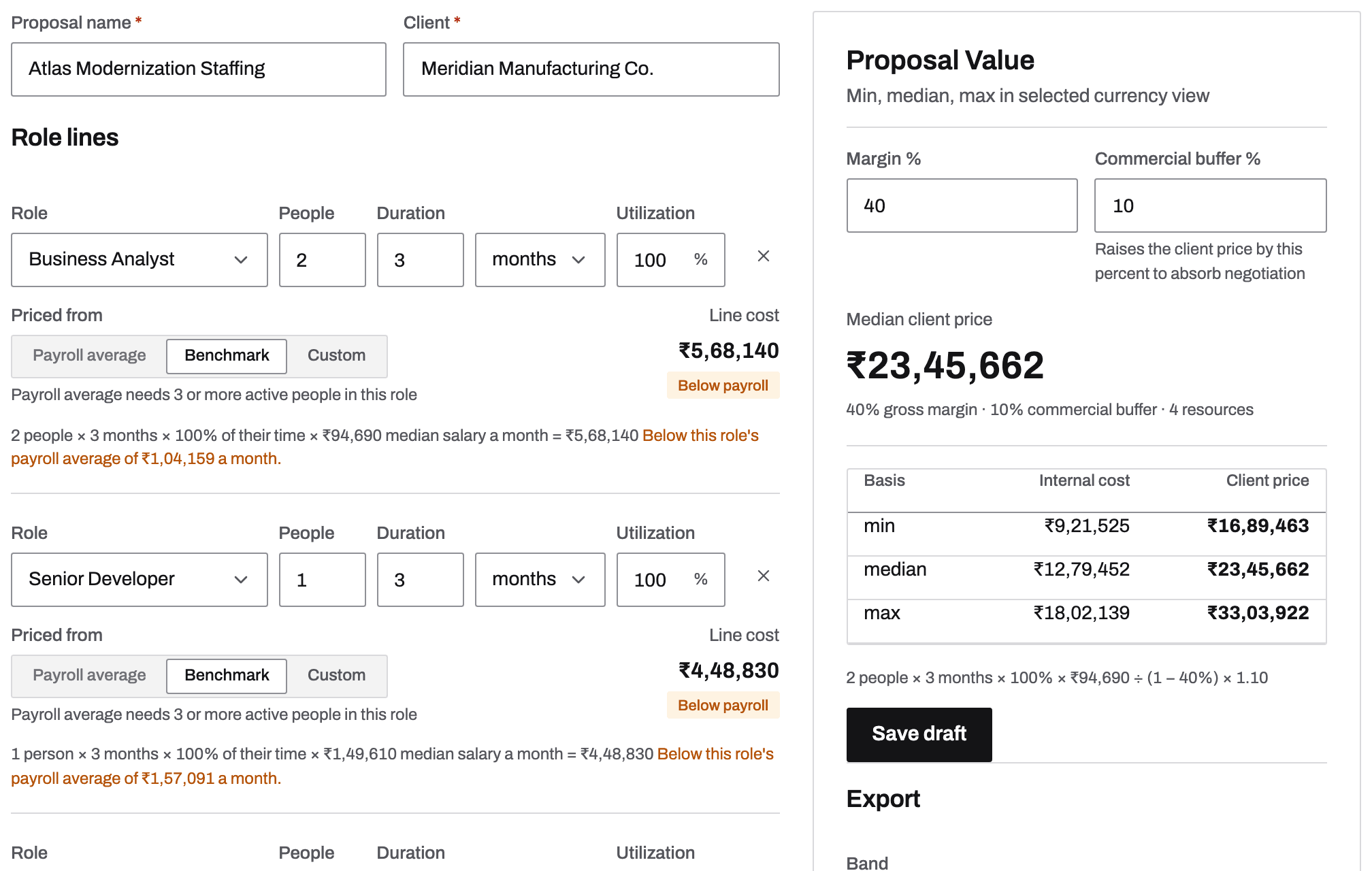
A proposal line starts from the role's real average cost, shows the finance-owned band beside it, and turns amber when the quote sits below payroll. INR workspaces start on India-market salary bands by role (finance edits them in Settings), so a quote can be checked against the market before it goes out.
Every quote records its rate and date. A saved proposal keeps the INR/USD rate it used, where the rate came from, and the day, so finance can re-open it a year later.
Definitions
- Confirmed run rate
- The monthly value of every confirmed allocation on an active project, billed at each person's rate.
- Tentative run rate
- The same total, counting allocations that are still marked tentative.
- Pipeline
- The combined price of every proposal still in draft or submitted, waiting on a decision.
- Active load
- How much of a person's time is committed to confirmed work, as a percent.
- Total demand
- A person's confirmed and tentative commitments added together, as a percent.
- Over-allocated
- People committed past 100% of their time on confirmed work alone.
- At risk
- People who are fully loaded once tentative work is counted, even though their confirmed load looks fine today.
- Under-utilized
- People staffed on some confirmed work but under half their time.
- Bench
- People with no confirmed work at all this month.
- Average utilization
- The average confirmed load across everyone active, each person capped at 100%.
- Burnout markers
- People loaded at 110% or more, or holding three or more confirmed assignments at once.
- Bench cost
- What the people on the bench cost every month, whether or not they are billing.
- Average monthly cost by role
- What a role actually costs per month, averaged across the people doing it today.
- Role benchmark
- The market range finance has set for a role, so a quote can be checked against it.
Start with your own roles and headcount.
Early access runs on a synthetic sheet: invented names, no emails or employee codes, your real role titles and headcount per role, costs at the band median. Real employee data waits for the hosting plan; we say when.